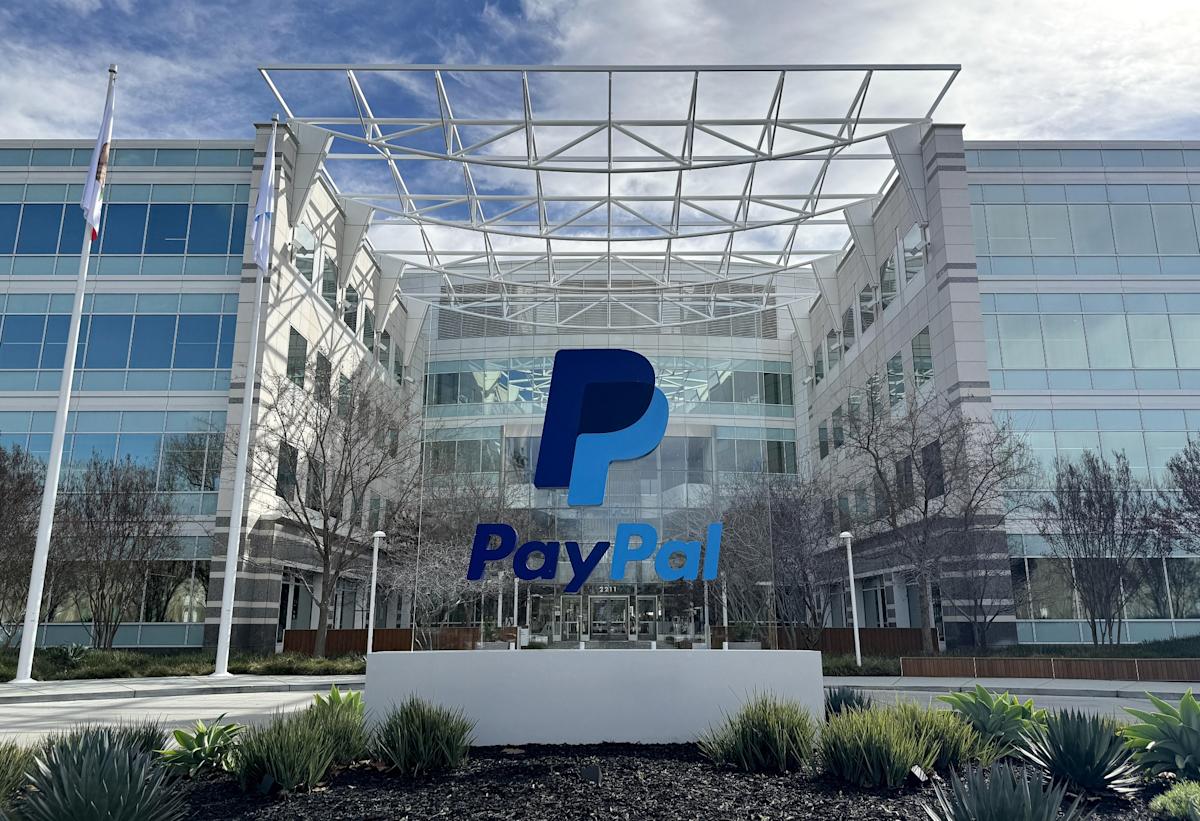
PayPal's Payment Woes: Navigating the Current Stock Slump
PayPal Holdings Inc., once a trailblazer in the digital payments arena, is currently navigating turbulent waters. After experiencing a significant paypal stock slump that has wiped out nearly half its market value, the company finds itself at a critical juncture. The once-dominant payment processor, synonymous with online transactions for decades, is now fighting to retain its relevance in an increasingly crowded and competitive landscape. This dramatic downturn has not only spurred whispers of potential takeover interest but has also set the stage for a new leadership era, with Enrique Lores stepping in as CEO on March 1st. His mandate is clear: modernize, innovate, and restore investor confidence.
The company's shares, which at one point had plummeted approximately 46% over the past year and more than 50% from their 52-week highs, saw a temporary bounce following news of preliminary takeover interest. However, sustained recovery hinges less on speculative bids and more on a robust strategy to address its core operational and technological challenges.
The Anatomy of PayPal's Recent Stock Slide
The recent intensification of the paypal stock slump can be traced directly to the company's Q4 2025 earnings report. Despite showing profitability improvements in 2025 with 7% revenue growth, the market reacted harshly to the Q4 figures and, more critically, to the company's weaker-than-expected 2026 guidance. PayPal reported Q4 revenue of $8.68 billion, falling short of analyst estimates of $8.80 billion, and adjusted EPS of $1.23, missing the consensus of $1.30–$1.33.
The truly concerning signal for investors, however, was the outlook for 2026. PayPal projected revenue growth of just 3-4% for the full year and anticipated a mid-single-digit EPS decline in the first quarter, with transaction margin dollars expected to decline throughout fiscal 2026. This forecast suggested significant margin compression and ongoing operational hurdles, amplifying negative market sentiment. Such lukewarm guidance from a technology company is often perceived as a red flag, indicating a lack of clear growth drivers or an inability to capitalize effectively on market opportunities.
This financial disappointment coincided with a leadership reshuffle. Former CEO Alex Chriss, whose turnaround plan emphasizing high-margin profitability and AI-driven agentic commerce initiatives ultimately fell short, was ousted. This dual blow of poor performance and leadership change created a vacuum of uncertainty, further fueling the sell-off and solidifying the ongoing paypal stock slump.
Navigating the Shifting Sands: Why PayPal is Losing Ground
PayPal's foundational success in the late 1990s as an early mover in digital payments is undeniable. Yet, the company has struggled to adapt to the rapid evolution of the payments landscape. A key factor contributing to its challenges is a perceived failure to modernize its core payments technologies at a pace that matches consumer expectations and competitor innovation. Customers are increasingly opting for alternative, often more streamlined, ways to pay for goods and services.
The market share erosion is stark. Rivals such as Apple Pay and Google Pay have carved out significant portions of the digital wallet market, leveraging their vast mobile ecosystems and seamless user experiences. These competitors often offer integrated solutions that are deeply embedded in smartphone operating systems, providing a level of convenience and ubiquity that PayPal has found challenging to replicate across all platforms. Furthermore, the rise of specialized fintech startups, instant payment networks, and even traditional banks enhancing their digital offerings has intensified the competitive pressure from all sides.
Beyond direct competition, a broader trend in consumer behavior also impacts PayPal. The proliferation of "buy now, pay later" (BNPL) services, cryptocurrency payments, and even direct bank transfers for certain transactions means that the traditional PayPal checkout button, while still ubiquitous, is no longer the default for many. This shift demands a more agile and innovative response from PayPal to re-establish its indispensable position in the payment flow.
A New Captain at the Helm: Enrique Lores' Formidable Challenge
The arrival of Enrique Lores as PayPal's new President and CEO on March 1st marks a pivotal moment. As the former board chair, Lores brings an intimate understanding of the company's struggles and its immense potential. His immediate priorities will be Herculean: reversing the paypal stock slump, stemming market share losses, and significantly modernizing PayPal's payments infrastructure.
Lores will need to articulate a clear vision for how PayPal can regain its innovative edge. This includes potentially re-evaluating the company's approach to "agentic commerce," a concept that previous CEO Alex Chriss had championed. Agentic commerce refers to AI-driven systems that can autonomously make purchasing decisions on behalf of users. While promising, PayPal needs to demonstrate how this can translate into tangible user benefits and revenue growth in a way that differentiates it from competitors and leverages its existing strengths, rather than just being a buzzword.
Moreover, the new leadership must address the perceived technological stagnation. This could involve significant investment in R&D, strategic acquisitions of innovative smaller firms, or a complete overhaul of internal development processes to foster faster deployment of new features and products that truly resonate with modern consumers.
Is PayPal a Hidden Gem? Takeover Whispers and Analyst Optimism
Amidst the turmoil, the paypal stock slump has inadvertently made the company an attractive target. Preliminary takeover interest from potential buyers, including at least one large rival looking at the entire company and others interested in specific assets, suggests that underneath the current struggles, PayPal possesses significant intrinsic value. The shares jumped on news of this interest, underscoring the market's belief in its underlying assets.
Analysts largely echo this sentiment. Firms like Mizuho Securities contend that PayPal is "deeply undervalued," highlighting its status as one of only four globally recognized payment networks. They point to PayPal's nearly $2 trillion in annual transaction volume and its ownership of Venmo, the "most prominent US P2P network," as undeniable strengths. Similarly, KBW analysts emphasize PayPal's "scarce and strategically valuable" network assets, noting their potential importance for firms seeking a larger role in agentic commerce. Prior to the recent collapse, 60% of analysts held Buy ratings with an average price target of $84, and hedge funds had been quietly rebuilding positions, citing PayPal's "absurdly low" forward P/E ratio compared to peers like Visa and Mastercard.
However, the value proposition isn't without its risks. A recent report by Citrini Research outlining the potential risks that artificial intelligence could pose to various segments of the global economy, including payments, adds another layer of complexity. While AI presents opportunities for agentic commerce, it also threatens to disrupt traditional payment intermediaries if not properly harnessed.
Revitalizing the Digital Payments Giant: Key Strategies for Lores
For Enrique Lores, navigating PayPal's comeback requires a multi-pronged approach:
- Innovation Acceleration: Re-ignite a culture of rapid innovation. This means not just incremental improvements but bold moves into emerging technologies like advanced AI for fraud detection and personalized financial services, blockchain for faster and cheaper cross-border payments, and next-gen payment rails.
- User Experience (UX) Enhancement: Simplify and streamline the user journey across all PayPal and Venmo platforms. A cluttered or complex interface drives users to simpler alternatives. Focus on speed, intuitive design, and adding clear value beyond basic transactions.
- Strategic Partnerships: Forge deeper, more meaningful alliances with e-commerce platforms, financial institutions, and potentially even other tech giants to expand PayPal's reach and embeddedness in diverse digital ecosystems.
- Leverage Core Assets: Maximize the monetization potential of Venmo, exploring new services like advanced business tools or crypto integration. Leverage PayPal's global network and massive user base to offer unique cross-border payment solutions or merchant services.
- Cost Efficiency & Margin Improvement: While growth is key, Lores must also pursue operational efficiencies and identify high-margin services that can bolster profitability, particularly as transaction margins face pressure.
- Reaffirm Developer Ecosystem: Engage and support third-party developers to build on PayPal's platform, fostering a vibrant ecosystem of innovation that extends PayPal's utility and reach.
Conclusion
PayPal stands at a critical juncture. The significant paypal stock slump is a clear indicator that the market demands more than past glory; it demands renewed innovation and a decisive strategy for the future. While the underlying assets and network are undeniably valuable, the execution of a compelling turnaround plan under Enrique Lores will dictate whether PayPal reclaims its leadership position or continues to cede ground. The road ahead is challenging, but with strategic clarity, aggressive modernization, and a focus on delivering undeniable value to both consumers and merchants, PayPal has the potential to write its next chapter as a revitalized digital payments powerhouse.